Zurich Opera House: history, ballet and tips for your evening
The Opera House on Sechseläutenplatz describes itself as Switzerland’s largest cultural institution, with 15 to 17 new productions and over 300 performances a year. It is also the home of the Zurich Ballet.
- Address
- Sechseläutenplatz 1, 8008 Zürich
- From Zürich HB
- S-Bahn to Stadelhofen, then a few minutes on foot
- Seats
- About 1,100
- Tickets
- Programme and tickets
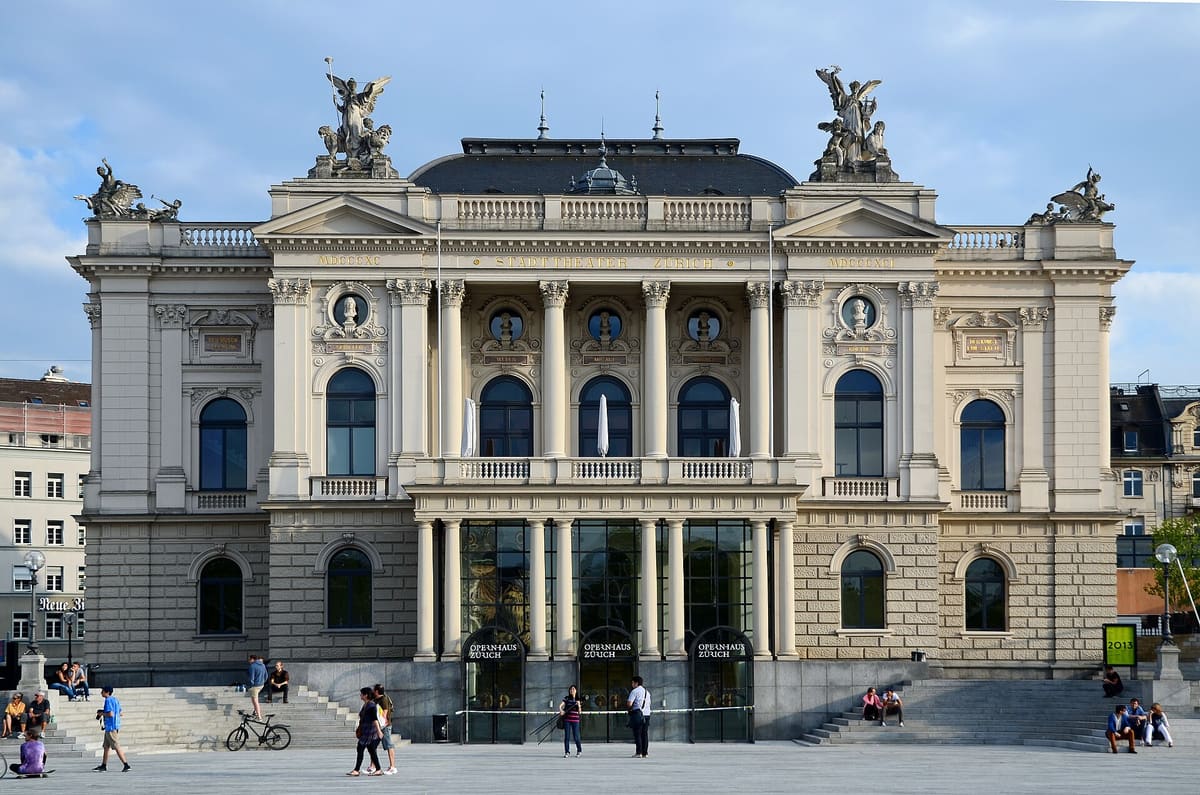
The Zurich Opera House building
The present building was designed by the Viennese theatre architects Fellner & Helmer and built in only 16 months. It opened in 1891 as the "Stadttheater" with Wagner’s "Lohengrin". The neo-classical façade is adorned with busts of Weber, Wagner and Mozart, as well as Schiller, Shakespeare and Goethe; the auditorium is in neo-rococo style and seats about 1,100 people.
The Zurich Ballet, which the house calls Switzerland’s largest professional ballet company, is based at the Opera House. The house’s own orchestra was founded in 1985. The Opera House is still run by a public limited company with around 2,500 private shareholders; the Canton of Zurich has been its main subsidiser since 1995. In 2014 it was named "Opera Company of the Year" at the International Opera Awards.
Zurich Opera House: a short history
- Zurich’s first permanent theatre, the "Actien-Theater", opened in 1834 with Mozart’s "Magic Flute"; it was founded by citizens as a joint-stock company.
- After the Actien-Theater burnt down in 1890, the present building was erected and opened in 1891.
- Since 1921 musical theatre and drama have been separate in Zurich; the building has been called the Opera House since 1964.
- In May 1980 large youth protests erupted over high opera subsidies and the lack of cultural programmes for young people.
- The house was completely renovated in 1982–1984 and extended on Utoquai with a second, studio stage.
Tips for your evening at the Zurich Opera House
- There is no dress code – dress to feel at ease; premieres and galas tend to be more formal.
- Almost all operas are sung in the original language, generally with German and English surtitles (not equally visible from all seats).
- Performances start on time; latecomers are admitted only after the break.
- Photos, sound and video recordings are not permitted during performances. Coats and large bags go to the free cloakroom.
- Zürich Tourism mentions open-air performances such as "Opera for All" or "Ballet for All" – check the Opera House programme.
How to get to the Zurich Opera House from Zürich HB
- S-Bahn to Zürich Stadelhofen, then a few minutes on foot.
- By tram from the city centre: lines 11 and 15 to the stop "Opernhaus", or to "Bellevue" and walk.
- The lake promenade at Utoquai is right behind the house – see Lake Zurich.
Zurich Opera House: questions and answers
Where is the Zurich Opera House?
The Opera House is at Sechseläutenplatz 1, 8008 Zürich. From Zürich HB, take the S-Bahn to Zürich Stadelhofen, then it is a few minutes on foot; by tram from the city centre, lines 11 and 15 go to the stop "Opernhaus".
Is there a dress code at the Zurich Opera House?
There is no dress code – dress to feel at ease; premieres and galas tend to be more formal.
Are operas at the Zurich Opera House sung in English?
Almost all operas are sung in the original language, generally with German and English surtitles (not equally visible from all seats).
Can I arrive late at the Zurich Opera House?
Performances start on time; latecomers are admitted only after the break. Coats and large bags go to the free cloakroom.
How many seats does the Zurich Opera House have?
The neo-rococo auditorium seats about 1,100 people. According to the house, it stages 15 to 17 new productions and over 300 performances a year.
When was the Zurich Opera House built?
The present building was built in only 16 months and opened in 1891 as the "Stadttheater" with Wagner’s "Lohengrin". It has been called the Opera House since 1964.
Is the Zurich Ballet based at the Opera House?
Yes. The Zurich Ballet is based at the Opera House. Zürich Tourism also mentions open-air performances such as "Opera for All" or "Ballet for All" – check the Opera House programme.