Kunsthaus Zürich: Giacometti, Munch, Monet and Dada
With the extension by David Chipperfield, which opened in autumn 2021, the Kunsthaus describes itself as Switzerland’s largest art museum in terms of space. Its collection spans more than 800 years of art, from the Middle Ages to today.
- Address
- Heimplatz 1, 8001 Zürich
- From Zürich HB
- Tram 3 or bus 31 to "Kunsthaus", no change
- Opened
- 17 April 1910
- Opening hours
- See official website
What to see
According to the museum, the Kunsthaus holds the most important museum collection of works by Alberto Giacometti, the largest group of paintings by Edvard Munch outside Norway and the world’s largest collection of objects from the Dada movement, which was founded in Zurich in 1916. Highlights include Claude Monet’s two large water-lily panels and works by Van Gogh, Picasso, Chagall and Andy Warhol.
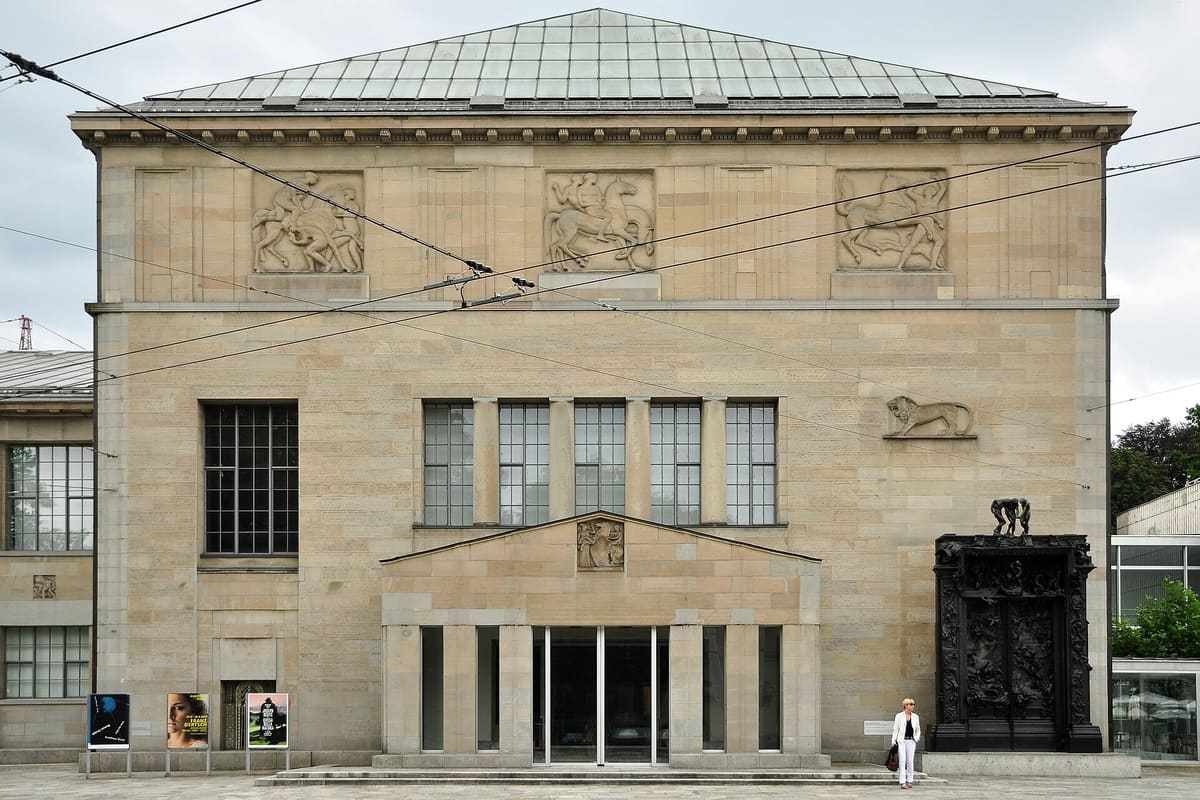
The two buildings – the original Moser building and the Chipperfield extension – face each other across Heimplatz and are linked by an underground passage. With the extension, the number of permanently displayed works doubled to about 700. Since 2021 the Chipperfield building has shown the Emil Bührle Collection on long-term loan; its presentation has drawn public criticism over the provenance of some works.
A short history
- The Kunsthaus grew out of an artists’ society founded in 1787, which began collecting art in 1794.
- The museum opened on 17 April 1910 in a building by Karl Moser and Robert Curjel; Moser extended it in 1925.
- Further extensions followed in 1958 (exhibition wing by the Pfister brothers, financed by Emil G. Bührle) and 1976 (by the architect Erwin Müller).
- Half of the construction costs of the Chipperfield extension came from private sources; the City and Canton of Zurich paid the other half.
Tips for your visit
- Private photography is allowed in the collection and exhibitions, except where marked – no flash, tripod or selfie stick.
- Use the online visitor guide (no download needed) or ask for a printed map at the ticket desk.
- Audio guide for the collection in German, English and French, plus a children’s audio guide.
- Only small handbags (max. A4) are allowed in the galleries; lockers are in both buildings.
- The museum is fully step-free, with lifts to all levels, and has free Wi-Fi.
- See Chagall in the collection, then his windows in the Fraumünster.
Getting there from Zürich HB
- Tram 3 or bus 31 run directly from the main station to the stop "Kunsthaus" (Heimplatz), without changing. The stop is also served by trams 8 and 9.
- The museum describes its location as in the heart of Zurich’s Old Town.